
In the UK, fire safety is paramount for landlords managing Houses in Multiple Occupation (HMOs). Due to the increased risk factors associated with shared living spaces, understanding which fire extinguishers are best suited for HMOs can be critical for ensuring tenant safety and legal compliance. This guide will walk you through the best practices and types of fire extinguishers to use in an HMO setting, helping you make informed decisions to protect your tenants and property.
Why Fire Safety Is Crucial in HMOs
An HMO, or House in Multiple Occupation, refers to a property where multiple tenants live, often sharing facilities like kitchens, bathrooms, and communal areas. HMOs tend to have a higher occupancy, which elevates fire risks. UK regulations mandate landlords to adhere to rigorous fire safety standards in HMOs to ensure the safety of all occupants.
Legal Requirements for Fire Extinguishers in HMOs
While fire safety regulations differ depending on the property size and occupancy type, there are specific legal requirements for HMOs in the UK:
Comply with the Fire Safety Order (FSO) – Under the Regulatory Reform (Fire Safety) Order 2005, landlords must ensure that the HMO has appropriate fire safety measures in place, including fire extinguishers.
Regular Fire Risk Assessments – Landlords are required to conduct periodic fire risk assessments to determine necessary safety measures.
Clear Fire Extinguisher Provision – Extinguishers should be provided, particularly in shared kitchens and communal areas, where fire risks are higher.
Get the Certificates for HMO Landlords
Looking for ‘HMO Landlord Certificates Near You’? We’re Here to Help!
Types of Fire Extinguishers for HMOs in the UK
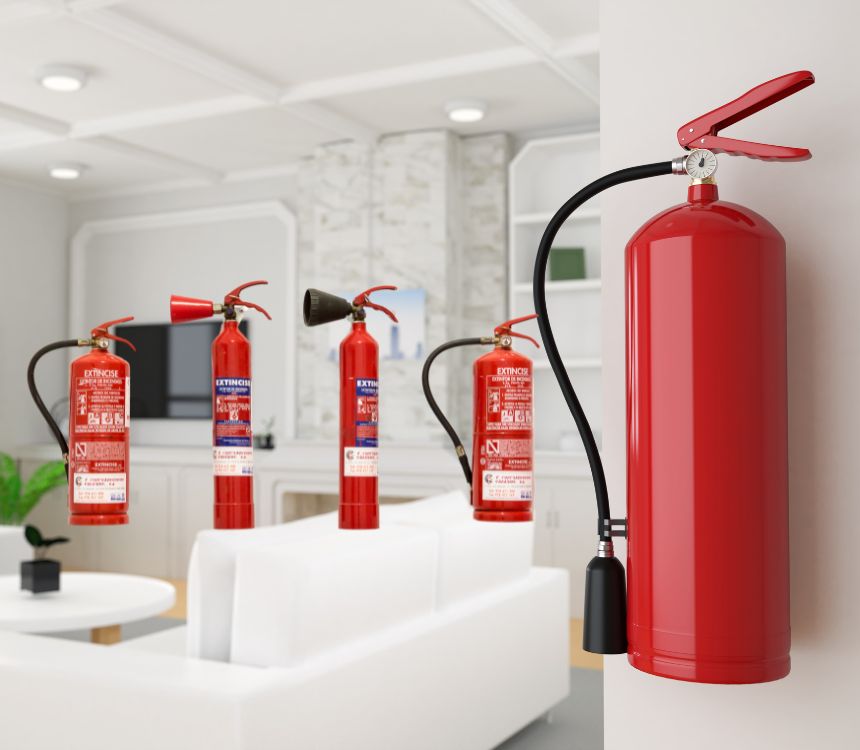
Choosing the right fire extinguisher for an HMO in the UK is essential. Fire extinguishers come in various types, each suited to specific kinds of fires. Here’s a breakdown of the common types and where they are best used in an HMO:
Water Fire Extinguishers (Class A)
- Purpose: Suitable for fires involving organic materials such as wood, paper, and fabric.
- Recommended Placement: Hallways, stairwells, and communal areas.
- Benefits: Water extinguishers are straightforward to use and effective for Class A fires, making them a good general-purpose choice for HMOs.
Foam Fire Extinguishers (Class A and B)
- Purpose: Effective for fires involving flammable liquids (Class B), such as petrol and paint, as well as organic materials (Class A).
- Recommended Placement: Living rooms and communal lounges where various fire risks may occur.
- Benefits: Foam extinguishers offer versatility, covering both Class A and Class B fires, which is useful in an HMO with diverse risk sources.
CO2 Fire Extinguishers (Class B and Electrical Fires)
- Purpose: Ideal for electrical fires and flammable liquid fires (Class B).
- Recommended Placement: Kitchens, boiler rooms, and areas with electrical equipment.
- Benefits: CO2 extinguishers are safe to use on electrical fires, making them a necessary choice for kitchens or areas with appliances and wiring.
Powder Fire Extinguishers (Class A, B, and C)
- Purpose: Suitable for a wide range of fire types, including flammable gases (Class C).
- Recommended Placement: Typically suitable for HMOs where multiple types of fire risks exist.
- Benefits: Powder extinguishers are multi-purpose, but they can create a mess and reduce visibility. For this reason, they are better suited to HMOs with varied fire hazards but may not be ideal for enclosed indoor areas.
Wet Chemical Fire Extinguishers (Class F)
- Purpose: Specifically designed for fires involving cooking oils and fats (Class F).
- Recommended Placement: Shared kitchens in HMOs.
- Benefits: Wet chemical extinguishers are the only effective solution for kitchen fires involving deep fat fryers or oils, which is why they are essential in any HMO kitchen.
Where to Place Fire Extinguishers in an HMO
Proper placement of fire extinguishers in an HMO is essential for effective fire safety. Here are some general guidelines:
Kitchens: Wet chemical extinguishers should be placed in shared kitchens due to the specific risks associated with cooking.
Communal Areas and Corridors: Water or foam extinguishers are suitable for general areas where organic material fires are likely.
Rooms with Electrical Equipment: CO2 extinguishers should be accessible in rooms with multiple electrical appliances.
Exit Routes: Extinguishers should be placed along exit routes, allowing tenants to access them easily if needed.
Fire Safety Tips for HMO Landlords
In addition to installing the correct fire extinguishers, landlords should consider these safety practices:
Install Smoke Alarms and Heat Detectors: Smoke alarms are required in most rooms, with heat detectors often recommended for kitchens.
Provide Clear Fire Safety Instructions: Display clear, visible fire safety instructions in communal areas.
Regular Maintenance: Fire extinguishers should be serviced annually to ensure they remain in good working order.
Educate Tenants: Offer basic fire extinguisher training and ensure tenants know where extinguishers are located and how to use them.
HMO Landlord Certificates
In Closing
Selecting the right fire extinguisher for your HMO is crucial to ensure the safety of your tenants and the security of your property. By understanding fire extinguisher types and adhering to UK fire safety regulations, HMO landlords can create a safer living environment and mitigate fire risks effectively.
Regular maintenance and tenant education can further enhance fire safety, giving landlords peace of mind and helping tenants feel secure in their homes.
FAQs
Are fire extinguishers mandatory in HMOs in the UK?
While requirements vary, fire extinguishers are generally recommended for HMOs, especially in communal areas and kitchens, due to the higher fire risks.
What type of fire extinguisher is best for an HMO kitchen?
Wet chemical extinguishers are essential for HMO kitchens, as they are the only type suited for fires involving cooking oils and fats.
Can I use a multi-purpose fire extinguisher in an HMO?
Yes, powder fire extinguishers are multi-purpose and can cover various fire types, though they may not be ideal for confined indoor areas due to visibility issues.
Further Reading
How to Get the Fire Safety Certificate for an HMO
HMO Electrical Requirements: A Comprehensive Guide for Landlords
HMO Landlord: How to Set Up a Company
What Certificates Are Required for HMO Properties?
How to Check if a House Has an HMO Licence
HMO Minimum Room Size Requirements
HMO Certificate of Compliance: Essential Guide
Does an HMO Certificate Have to Be on Display at the Property?
How to Expedite an HMO Certificate
How Often Does an HMO Require an Electrical Installation Certificate?
Landlord HMO Safety Certificate Cost: Essential Guide
What Happens When an HMO Licence Expires?
How to Convert a House to an HMO
What Are the Likely Requirements for a Section 254 HMO?
Do You Pay Council Tax in an HMO? A Guide for Landlords